Archives
Categories

Slack Wax

HIGH CONTENT

About Slack Wax
Slack wax is a semi-refined petroleum wax produced during the lubricating oil refining process when wax crystals are separated from base oil. It contains a mixture of solid paraffin wax and residual oil, which is why it appears soft, oily, and yellow to brown in color. Refineries obtain slack wax before full refining, and manufacturers later process it into fully refined paraffin wax, semi-refined wax, or residue products such as foots oil. Because slack wax offers a balance of wax content and oil, industries use it as a cost-effective raw material for producing candles, polishes, rubber compounds, waterproofing materials, and industrial wax derivatives.
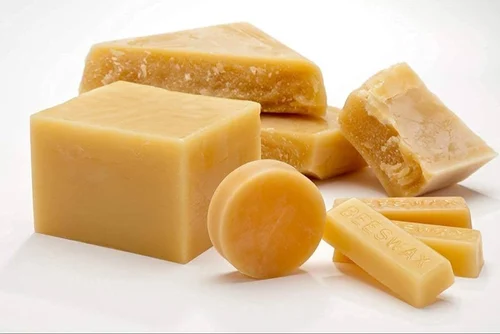
General description of slack wax
- Only 2% of crude oil is converted into lubricating oils, and a small percent of that processed into wax products. Paraffin and Microcrystalline are separated from lubricating oils during vacuum distillation.
- Slack Wax is derived from lubricating oils and are less refined high oil products. These high oils have relatively high oil content and processed further to produce more refined waxes. Most slack waxes do not meet FDA requirements for food packaging.
- Slack Wax is a translucent crystalline material in the solid state and a yellow, clear liquid when molten.
- Slack wax verifies from light to heavy grades based on its melting point. Melting point 50-52 ˚C is categorized in light grades and 53-55 ˚C is the heavy grade, and their oil content ranges from 5.0% to as much as 35%.
- One of the many products derived from refining is lubricating oil, from which a byproduct called slack wax is obtained.
- Slack wax is the crude wax produced by chilling and solvent filter-pressing wax distillate. There are basically three types of slack wax produced, the type depending on the viscosity of the lube oil being dewaxed: low neutral, medium neutral, and heavy neutral.
Light & heavy slack wax & differences
A. Physical Properties:
Light: It is relatively softer and has a lower melting point compared to heavy slack wax.
Heavy: It is harder and has a higher melting point compared to light slack wax.
B. Composition:
Light Slack: It contains a higher proportion of lower molecular weight hydrocarbons, including lighter paraffinic compounds.
Heavy Wax: It contains a higher proportion of higher molecular weight hydrocarbons, including heavier paraffinic compounds.
C. Applications:
Light: Due to its softer nature and lower melting point, light wax is often preferred for applications that require flexibility.
Heavy: With its higher melting point and harder consistency,.